100+ People Took the Same Course. Only 3 Landed the Six-Figure Job. Here's the Real Difference.
Same instructor, same curriculum, same seven months. Over 100 people took the course, but only 3 landed a six-figure IT job. Here's what actually separated us: not talent, a system.

6 min de leitura
Conteúdo
More than 100 students. One accelerated program. Seven months.
Eight hours a week of live sessions, on top of everything else life demanded of us.
We were training to become Multi-Systems Administrators: Unix, Linux, and Windows. Same instructor. Same curriculum. Same hours. Same opportunity. Nobody in that room had an advantage the rest of us didn't.
When it ended, only three of us walked out with a full-time, six-figure IT job.
Three. Out of more than a hundred.
So what actually separated the three of us from everyone else in that (virtual) room?
It wasn't talent. It was a system.
I'd Seen This Before, Years Earlier, Sitting Next to a Girl in High School
The first time I noticed this principle, I didn't have language for it yet.
I was in high school, sitting next to a girl in class. For the first two or three quizzes, we scored about the same. Then something shifted: she started pulling 100% on every quiz after that, while I stayed right around average.
I was curious, not competitive. I asked if we could study together; not as a girlfriend, not even really as a friend, just two classmates trying to figure something out. We started meeting after school on our own. I kept asking her the same question: how are you doing this?
What she showed me wasn't a trick or a hidden talent. It was a repeatable process for how she studied, reviewed, and prepared, built on discipline, not instinct. I had always been smarter than average in that class. But "smarter than average" had never once made me the top score. The moment I stopped admiring her results and started building my own version of her process, everything changed.
That one shift is part of the reason I earned my bachelor's degree in Zimbabwe, came to the US, and completed my first master's degree.
But I didn't fully understand how big this principle was until I sat in that Systems Administrator program, years later, with over 100 other people.
Back to the Classroom: What the Other 97+ People Didn't Have
Seven months. Eight hours a week of live instruction, plus labs, plus practice, plus everything the certification demanded outside class time. It was an accelerated program. That meant there was no room to coast. You either kept a rhythm going every single week or you fell behind fast.
Everyone in that program had the same material. What nobody could see was what each person was doing with the hours outside the live sessions: how they reviewed, how they practiced beyond the assignments, how they networked, how they prepared for interviews, how they followed up, how they used the time nobody was grading them on.
The curriculum was identical for all of us. The systems running underneath it were not. That gap was invisible during the course, undeniable at graduation. That's the entire story. Three of us had built something the rest hadn't: a process for turning information into results, under real time pressure, without burning out.
The System Didn't Stop Working. It Kept Compounding.
That Systems Administrator certification wasn't the end of the story. It was the template.
After that program, I went after other accelerated courses: Cloud, DevOps, AI and Machine Learning. Each one got easier, not because the material got simpler, but because I wasn't starting from zero anymore. I already had a system for learning fast, retaining what mattered, and executing under pressure. I just pointed it at a new subject.
That same system is running right now. I currently work at IBM. I'm also in the middle of my PhD: halfway through coursework, and I've already started my research. None of that runs on motivation alone. It runs on the same system I first stumbled onto sitting next to a classmate in high school, and later had to sharpen for real in a room of a hundred people chasing the same certification I was.
Divine Provision Still Needs a System to Stand On
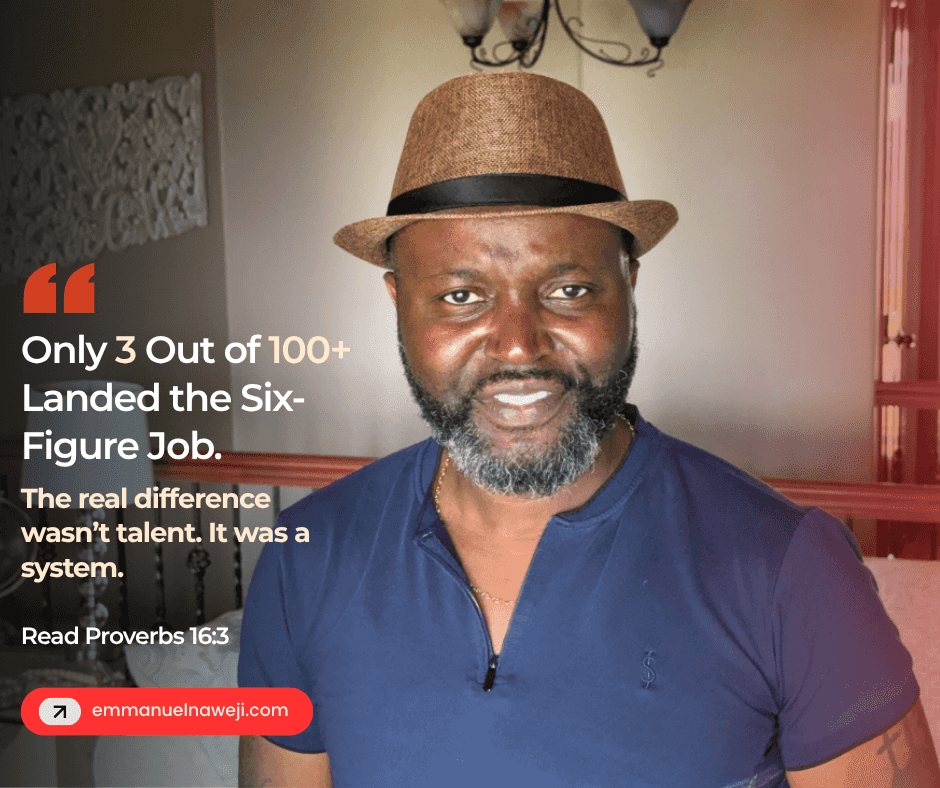
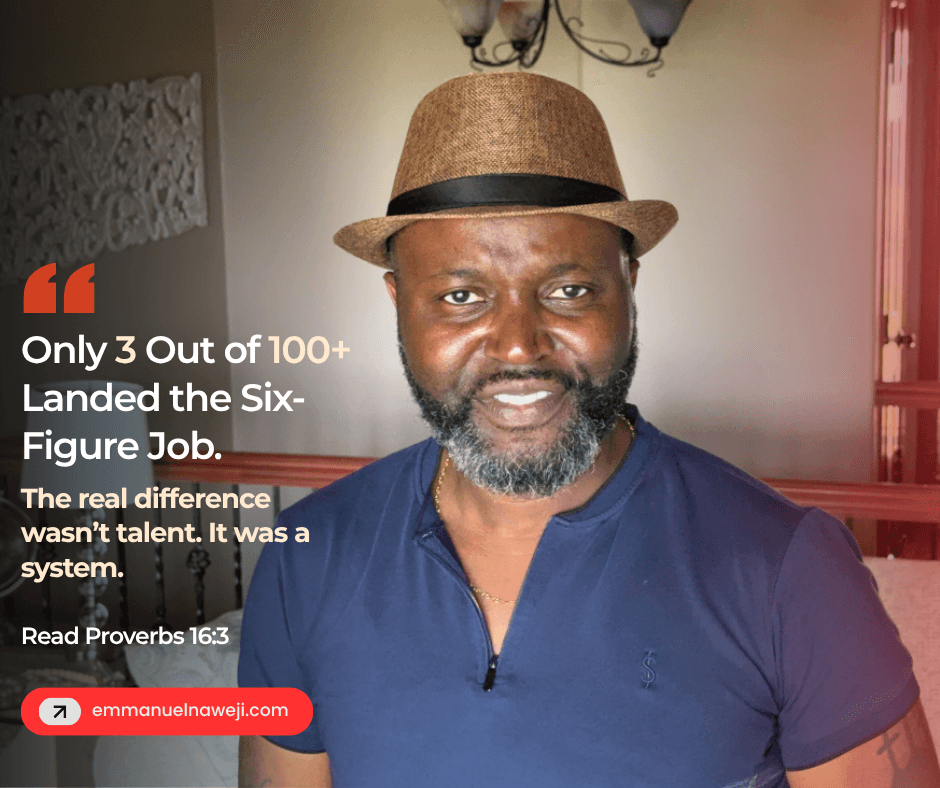
"Commit to the LORD whatever you do, and he will establish your plans." — Proverbs 16:3, the verse on the cover image above.
I believe in divine provision. I believe doors open that we didn't build with our own hands, and that favor shows up in ways we can't manufacture or take credit for. That part is real, and I don't discount it.
But provision without a system to receive it, sustain it, and grow it is provision wasted. Grace opens the door. Your system is what determines whether you can walk through it, stay in the room, and still be standing a year later. I've watched this play out in every arena: work, life, relationships, ministry. God opens the door. Discipline is what keeps you in the room.
This isn't a faith-versus-effort argument. It's both. Provision and process work together. One opens the opportunity. The other sustains it. As Proverbs 21:5 puts it: "The plans of the diligent lead surely to abundance, but everyone who is hasty comes only to poverty."
Building It Into Every Room You Walk Into
This principle doesn't stay contained to a classroom or a job search. A builder applies it everywhere:
- At work: a system for how you learn, execute, and follow through, not just a to-do list you react to.
- In life: a system for your time, your health, your finances, so good seasons and bad seasons don't derail you equally.
- In relationships: a system for how you communicate, show up consistently, and resolve conflict instead of avoiding it.
- In ministry: a system for how you prepare and serve, so your consistency doesn't depend on whether anyone's watching.
Builders think in decades, not days. They build the system once, refine it in public and in private, and let it compound quietly while everyone else is still waiting to feel motivated.
Over a hundred people can sit in the same accelerated program. Two people can sit next to each other in the same high school class. And they can walk away with completely different outcomes. The difference is almost never talent. It's rarely even opportunity: everyone in that Systems Administrator program had the exact same opportunity I did. The difference is the system each person was quietly running underneath it all.
So here's the real question: what system is currently running your work, your life, your relationships, your walk of faith? The one deciding whether you become one of the 3 out of 100+, or one of the rest. Did you build it on purpose? Or is it just something that happened to you?
That question is where building actually starts.