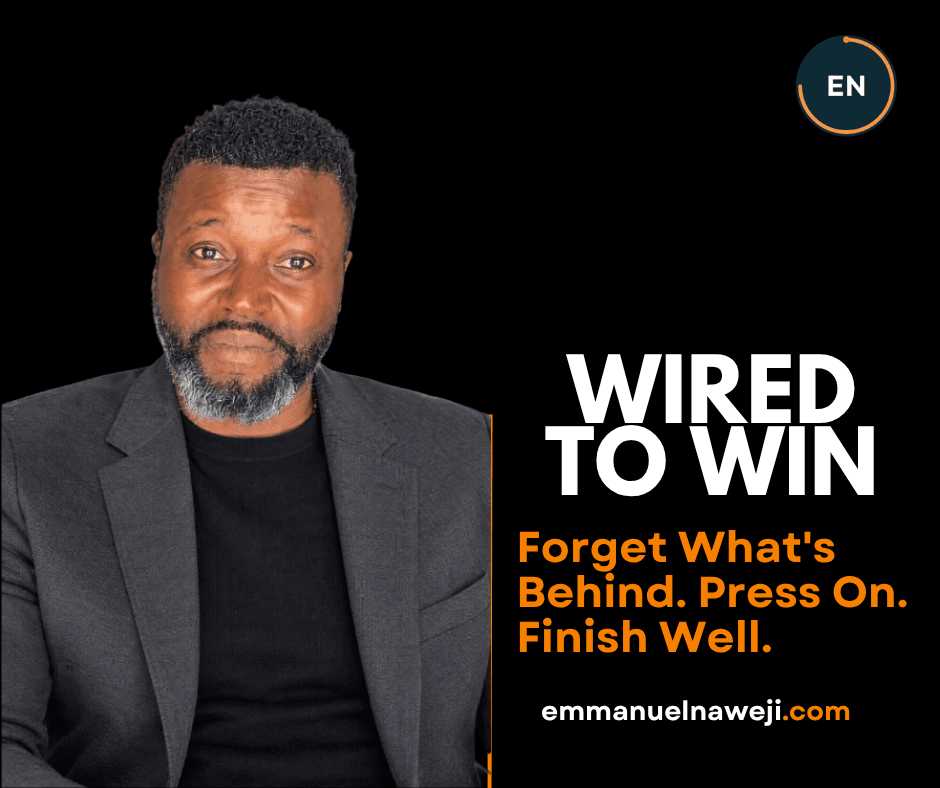
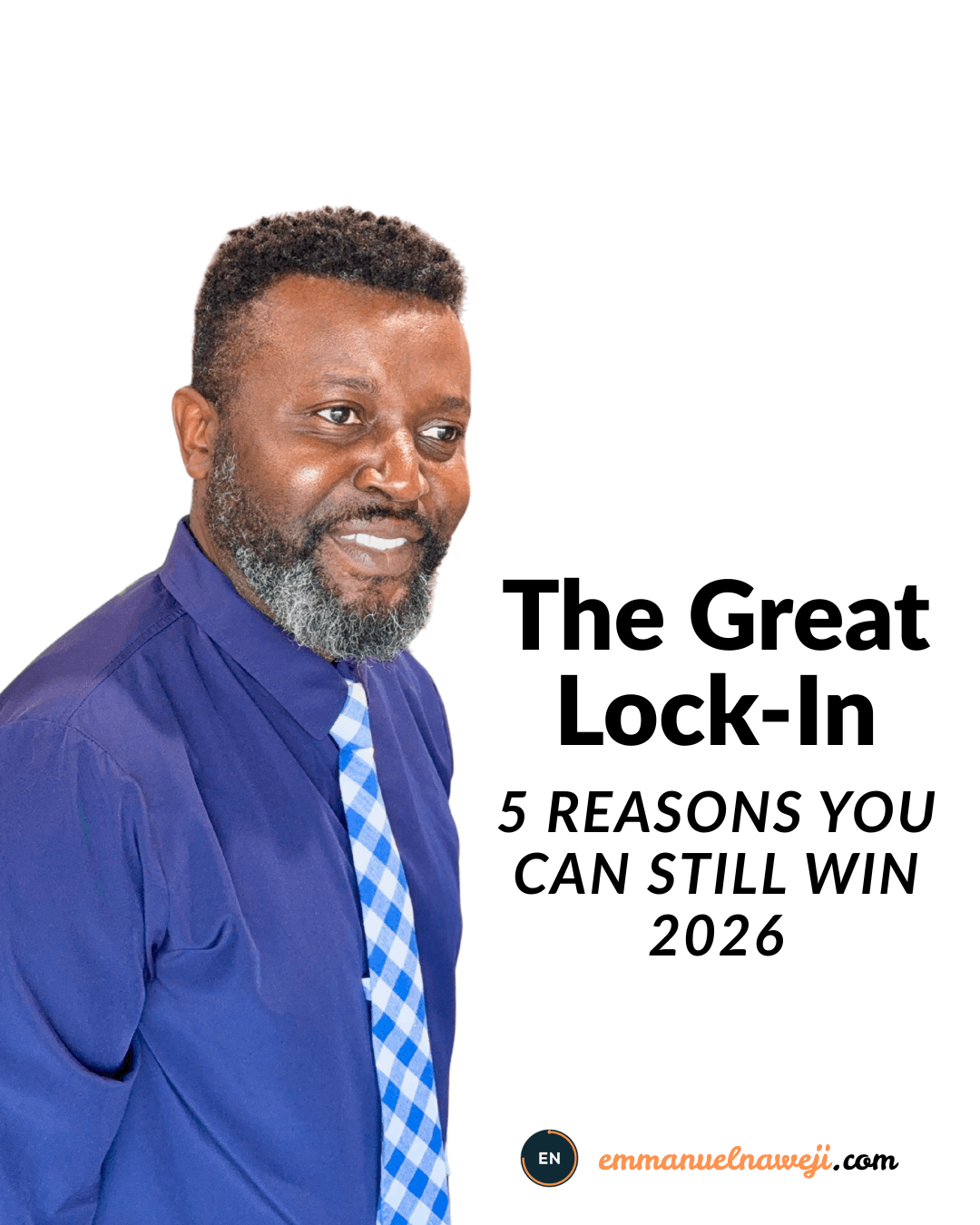
The Great Lock-In: 5 Reasons You Can Still Win 2026
Not hype. Five reasons you can do far more than you think, backed by Scripture, neuroscience, behavioral science, and the methods elite athletes actually use. Rooted in God. Wired to Win. Built to Last. Plus a free 7-day challenge anyone can start today.
13 min read

Contents
On May 6, 1954, Roger Bannister ran a mile in 3:59.4. For years, people had called the four-minute mile a wall. Some said the human body couldn't do it.
Forty-six days later, John Landy ran it faster.
The track didn't change. The legs didn't change. What changed was what people believed was possible, and what they were willing to train for once they believed it.
That's what this post is about. Not hype. Not "think positive and the money will come." I want to show you five reasons, backed by Scripture, neuroscience, behavioral science, and the methods the world's best athletes actually use, why you can do far more than you think.
First, let's be clear about what "anything" means.
What "Anything" Really Means
The most quoted verse on this topic is Philippians 4:13: "I can do all things through Christ who strengthens me."
Read the two verses before it. Paul wasn't talking about winning a trophy. He was writing from prison. He said he had learned to be content with a lot and with a little, hungry and full. "All things" meant any season. Rich or broke. Up or down. He could handle it, and keep going.
That's the "anything" I mean:
- Not everything at once. Anything you're called to, one season at a time.
- Not without cost. Anything you're willing to prepare for and practice.
- Not alone. Anything you're strengthened for, by God, by people, and by systems.
If you share my faith, that strength comes from God. If you don't, stay with me anyway. Every tool in this post works the same way for a CEO in New York, a student in Lagos, a nurse in Manila, or a single parent with $40 in the bank. None of them cost money.
This is the same blueprint I've been building with you in the Rooted, Built, Wired series: Rooted in God. Wired to Win. Built to Last. Here's how it holds up under the science.
Reason 1: You Were Designed on Purpose (Rooted)
"I will praise You, for I am fearfully and wonderfully made." (Psalm 139:14)
Everything starts with where you come from. If you believe you're an accident, every setback feels like proof. If you believe you were designed, every setback becomes data.
What the science says: In a 14-year study of over 6,000 adults (Hill & Turiano, 2014), people with a strong sense of purpose were less likely to die during the study period than those without one, at every age. Purpose isn't a soft idea. It shows up in the body.
Viktor Frankl survived the Nazi camps and later wrote that the people most likely to endure were those who had a reason to keep living: a person, a task, a future. He borrowed Nietzsche's line: someone with a why can bear almost any how.
What athletes do: The best teams build culture around something bigger than the scoreboard. When Pete Carroll's Seattle Seahawks won Super Bowl XLVIII, they had spent years working with performance psychologist Michael Gervais on one question: Who are you, and what do you stand for? Identity first. Performance second.
Your move: Write one sentence: "I exist to ___." Not a job title. A purpose. Mine is to help people be Transformed 2 Succeed.
I unpacked this more in Rooted in God: The Tree That Never Runs Dry. Two trees, same sun, same heat. The difference is underground.
Reason 2: Your Brain Can Be Rewired (Wired)
"Do not be conformed to this world, but be transformed by the renewing of your mind." (Romans 12:2)
Two thousand years before brain scans, Scripture said the mind can be renewed. Today we call it neuroplasticity: your brain physically changes based on what you repeat.
What the science says: London taxi drivers must memorize about 25,000 streets to earn their license. When researchers scanned their brains (Maguire et al., 2000), a memory region called the hippocampus was larger in the back, and the longer they'd driven, the bigger it was. Their brains grew to fit their work.
Your brain changes too. It is changing right now based on what you read, watch, say, and practice. The question isn't if you're being wired. It's by what.
What athletes do: They train their inner voice like a muscle. A review of 32 studies (Hatzigeorgiadis et al., 2011) found that planned self-talk improved sports performance in a meaningful way, from accuracy tasks to endurance.
There's a twist that works even better. Psychologist Ethan Kross found that talking to yourself by your own name ("Emmanuel, you've done hard things before") reduces anxiety and helps you think more clearly than saying "I." Distance creates calm.
Your move: Pick one sentence of truth for this week and say it out loud, using your name, every morning. For example: "___, you were made for this. Do the next right thing."
In You Were Wired to Win, I wrote about the filter in your brain that decides what you notice. "For as he thinks in his heart, so is he" (Proverbs 23:7). What you repeat, you become.
Reason 3: You Can Rehearse the Win Before You Live It (Wired)
"Write the vision and make it plain on tablets, that he may run who reads it." (Habakkuk 2:2)
Notice the order: see it, write it, then run.
What the science says: In a study at the Cleveland Clinic (Ranganathan et al., 2004), people who only imagined hard muscle contractions for 12 weeks, without moving, increased their finger strength by about 35%. Their brains got better at sending the signal. Mental practice is real practice.
What athletes do:
- Swimming: Michael Phelps rehearsed every race in his mind, the perfect version and the disaster version. At the 2008 Olympics, his goggles filled with water in the 200m butterfly. He couldn't see. He counted his strokes, the way he'd rehearsed, and won gold in world-record time.
- Golf: Jack Nicklaus said he never hit a shot, even in practice, without first "going to the movies": seeing the flight, the landing, and the swing in his head.
- Golf and beyond: Researcher Joan Vickers found that elite performers hold a longer, steadier final gaze on the target right before they act. She calls it the "Quiet Eye." Focus is trainable.
Your move: Before your next big moment (an interview, a pitch, a hard conversation, a workout) take 60 seconds. Close your eyes. See it going well. Then see one thing going wrong, and see yourself handling it calmly. That's the Phelps method. You're not wishing. You're rehearsing.
Reason 4: Pressure Is Fuel, Not a Verdict (Wired to Win)
"For God has not given us a spirit of fear, but of power and of love and of a sound mind." (2 Timothy 1:7)
Your heart pounds. Your hands sweat. Most people read those signals as: "I'm not ready." Top performers read the same signals as: "I'm ready to go."
What the science says:
- At Harvard, Alison Wood Brooks (2014) had people say "I am excited" before stressful tasks like public speaking and math tests. They performed better than people who tried to "calm down." It's easier to turn fear into excitement than to turn it off.
- Jeremy Jamieson (2010) told students that stress can help performance before a practice GRE. Their math scores went up, and the gains held on the real test.
Same body. Different story. Different result.
What athletes do:
- Soccer: Researcher Geir Jordet studied penalty shootouts at the World Cup and European Championships. Players who rushed their kicks right after the referee's whistle, trying to escape the pressure, tended to score less often than players who took a breath first. Slow down to speed up.
- Baseball: Even the greatest hitters fail about seven times out of ten. Mental skills coach Ken Ravizza (who worked with the 2016 World Series champion Chicago Cubs) taught players to "flush it": a physical cue to release the last mistake and get back to the next pitch.
- American football, basketball, golf, track: The best use pre-performance routines, the same breath, the same steps, the same words, every time. A routine tells your nervous system, "We've been here before."
Your move: Build your own 3-step reset for pressure moments:
- Breathe: two slow breaths, longer out than in.
- Reframe: say, "I'm excited. I'm ready."
- Flush: one small physical cue (a clap, a tap on the desk) to let go of the last mistake.
And for the person of faith, add a fourth: a one-line prayer. I've prayed for over 30 years. I wrote about why in Prayer Is Why I Am Still Standing. "Be strong and of good courage... for the Lord your God is with you wherever you go" (Joshua 1:9).
Reason 5: Small Actions Compound (Built to Last)
"Do you not know that those who run in a race all run, but one receives the prize? Run in such a way that you may obtain it." (1 Corinthians 9:24)
Paul used athletes as his example. He knew champions aren't made on game day. They're made on the quiet days nobody sees.
What the science says:
- Habits take time, not perfection. A study at University College London (Lally et al., 2010) found it took an average of 66 days for a new behavior to become automatic, with a range from 18 to 254 days. Missing one day didn't ruin it. Quitting did.
- Plans beat intentions. A review of 94 studies (Gollwitzer & Sheeran, 2006) found that "if-then" plans, like "When it's 6:00 a.m., then I open my laptop and study for 30 minutes," make people much more likely to follow through than goals alone.
- Rest is part of the work. At Stanford, Cheri Mah had basketball players sleep about 10 hours a night for several weeks. Their sprint times got faster and their free-throw and three-point accuracy each rose by about 9%. Recovery isn't laziness. It's training.
What athletes do: They don't wait to feel like it. They have a system. Practice at the same time. Film review on schedule. Sleep protected. Every day, one more brick.
Mel Robbins made this famous with the 5 Second Rule: when you know what you should do, count 5-4-3-2-1 and move before your brain talks you out of it. Feelings follow action. Not the other way around.
I lived this. Over 100 people took the same course I did. Only 3 of us landed the six-figure job. It wasn't talent. It was a system. That's why I keep saying build systems, not moods.
Your move: Write one if-then plan for the one thing that matters most this week:
When ___ (time + place), then I will ___ (one small action, under 30 minutes).
"Do not despise these small beginnings, for the Lord rejoices to see the work begin" (Zechariah 4:10, NLT). "Let us not grow weary while doing good, for in due season we shall reap if we do not lose heart" (Galatians 6:9).
The Five Reasons on One Page
| # | Reason | Rooted in Scripture | Backed by Science | Used by Champions | Your Move |
|---|---|---|---|---|---|
| 1 | You were designed on purpose | Psalm 139:14 | Purpose predicts longer life | Seahawks: identity first | Write "I exist to ___" |
| 2 | Your brain can be rewired | Romans 12:2 | Neuroplasticity, self-talk | Planned self-talk | Say one truth, using your name |
| 3 | You can rehearse the win | Habakkuk 2:2 | Mental practice builds strength | Phelps, Nicklaus, Quiet Eye | 60-second rehearsal |
| 4 | Pressure is fuel | 2 Timothy 1:7 | Stress reappraisal | Penalty kicks, "flush it" | Breathe, reframe, flush |
| 5 | Small actions compound | 1 Corinthians 9:24 | Habits, if-then plans, sleep | Daily systems, recovery | One if-then plan |
Your 7-Day "I Can" Challenge
You don't need to do all five at once. One per day, then put them together.
- Day 1: Write your purpose sentence. "I exist to ___."
- Day 2: Choose your truth sentence. Say it out loud, using your name.
- Day 3: Do a 60-second mental rehearsal before your hardest task.
- Day 4: Practice your pressure reset: breathe, reframe, flush.
- Day 5: Write one if-then plan and do it.
- Day 6: Protect your sleep. Aim for 7 to 9 hours. Rest is training.
- Day 7: Review. What worked? What did you notice? Write down one win, however small.
Then do it again next week. Remember: 66 days, not 6.
A Word to Wherever You Are Right Now
If you're broke: Every tool in this post is free. Purpose, self-talk, rehearsal, a breath, a plan, and sleep cost nothing. Start there.
If you're already successful: The higher you climb, the more the pressure grows. These are the same tools champions use to stay at the top, and to stay whole while they're there.
If you're not a person of faith: The science stands on its own. I'll simply tell you what I've found: when I'm rooted in God, I don't have to carry the whole weight myself.
If you feel broken: So did I. I wrote about it in God Builds With Broken Pieces. Your past is not your verdict. As Paul said, "forgetting those things which are behind... I press toward the goal" (Philippians 3:13-14). I went deeper on that in Wired to Win: Forget What's Behind. Press On. Finish Well.
The Bottom Line
You can do anything you're called to. Not because it's easy, but because:
- You were designed on purpose.
- Your brain can be rewired.
- You can rehearse the win.
- Pressure can become fuel.
- Small actions compound.
Rooted in God. Wired to Win. Built to Last.
Bannister didn't just believe the mile could be broken. He trained for it, one lap at a time. Belief opened the door. Practice walked through it.
Your turn. Which of the five will you start today? Tell me in the comments, or send this to one person who needs to hear "you can" this week.
"With God all things are possible." (Matthew 19:26)
Sources and further reading: Hill & Turiano (2014), Psychological Science; Frankl, Man's Search for Meaning; Maguire et al. (2000), PNAS; Hatzigeorgiadis et al. (2011), Perspectives on Psychological Science; Kross et al. (2014), Journal of Personality and Social Psychology; Ranganathan et al. (2004), Neuropsychologia; Vickers, research on the Quiet Eye; Brooks (2014), Journal of Experimental Psychology: General; Jamieson et al. (2010), Journal of Experimental Social Psychology; Jordet & Hartman (2008), Journal of Sport & Exercise Psychology; Lally et al. (2010), European Journal of Social Psychology; Gollwitzer & Sheeran (2006), Advances in Experimental Social Psychology; Mah et al. (2011), SLEEP; Robbins, The 5 Second Rule. Scripture quotations are from the NKJV unless noted.
- #PersonalGrowth
- #Mindset
- #Faith
- #Neuroscience
- #Performance
- #RootedBuiltWired